Article

Staying Dry on the Trail and Warm at Night

Rain rarely ruins a trip on its own; the damage comes from the chain that follows it. Five sources on staying dry and warm when the weather turns, in the order the problem tends to arrive: waterproofing boots at home, keeping water out of your pack on trail, holding heat in the tent, troubleshooting a cold night, and salvaging a sleeping bag that is already soaked.

wet weather hiking rain gear staying warm sleeping bags backpacking gear care
Staying Dry on the Trail and Warm at Night

Rain rarely ruins a trip on its own. What ruins it is the chain that follows: boots that soak through on the way in, a pack that quietly gets heavier all afternoon, and then a night spent waiting for a sleeping bag to dry that never does. Staying warm on a wet trip is mostly a run of small decisions made hours, or days, before you actually feel cold. The five sources collected here follow that chain in the order it tends to arrive.

Two of them are narrower than the heading above them, and it is worth knowing that before you click. The Barefoot Shoe Guide piece is an at-home seasonal care routine for barefoot boots specifically, material by material. It is not a wet-weather field guide, and it is not written for conventional hiking boots. The Washington Trails Association guide covers the trail side, but only the pack-protection and layering half of it: it says outright that sleep systems, tent condensation and wet down are somebody else's subject.

That gap is the reason for the three that follow. Happiest Outdoors takes the broad view of what holds heat in a tent overnight. TrailGroove is the narrower troubleshooting pass, for the night you are already lying awake and cold with nothing but the gear you carried in. And SectionHiker closes the set with exactly the case Washington Trails Association declines to cover, a sleeping bag that is already soaked, and what to do about it before morning.

Three of these five sites earn from gear links, retailer partnerships or their own guidebooks; each section below notes which, where it applies.

This article references third-party websites for informational purposes only. PackLite does not host, own, or claim any rights over the content of the linked sites. All screenshots are used for illustrative purposes and link back to their original source.
More on this topic

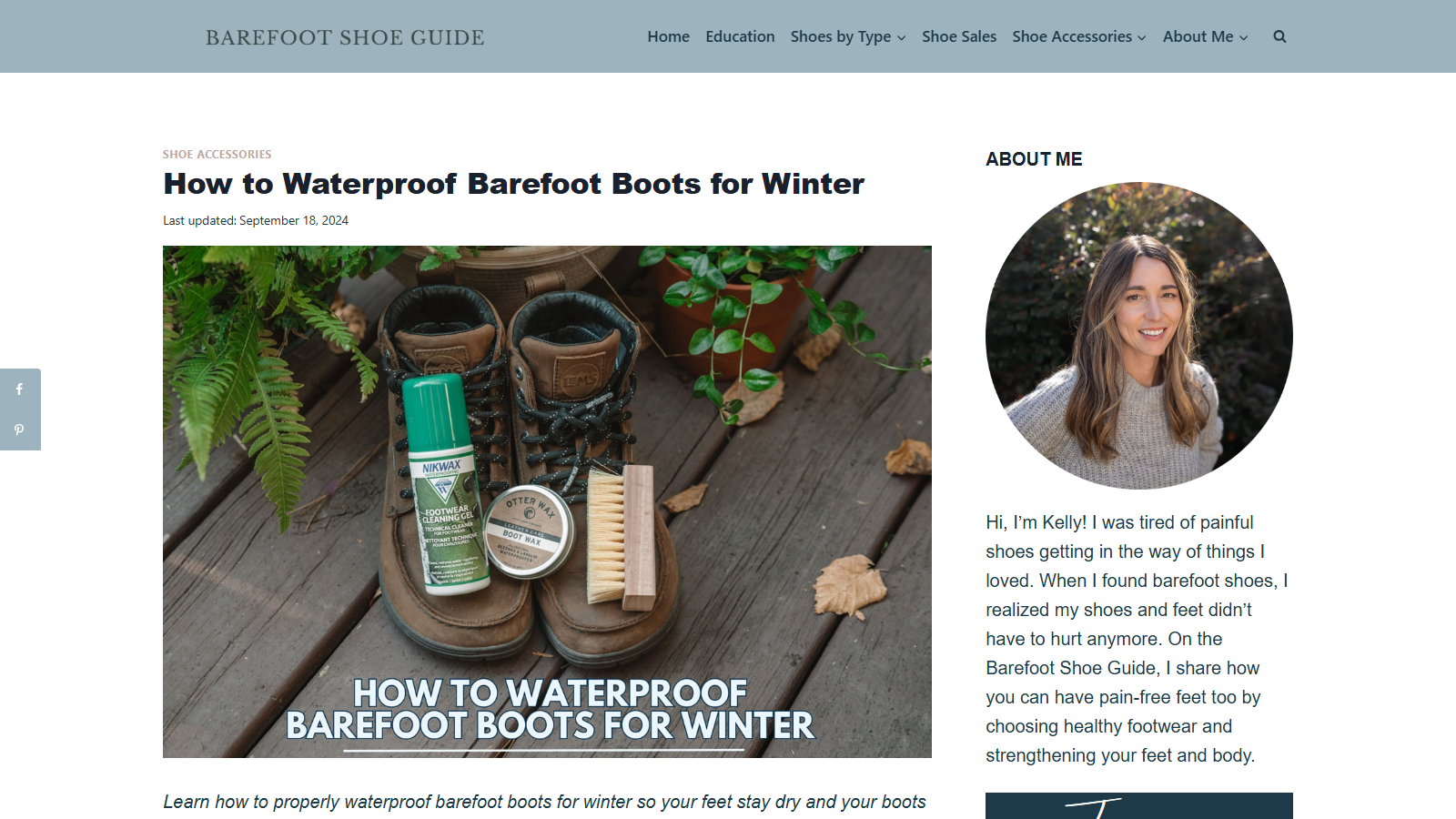
Barefoot Shoe Guide article page headed "How to Waterproof Barefoot Boots for Winter," last updated September 18, 2024, showing a pair of brown leather barefoot boots on a weathered wooden deck with a Nikwax footwear cleaning gel bottle, a tin of Otter Wax boot wax, and a wooden application brush, surrounded by ferns and fallen autumn leaves; a sidebar at right profiles author Kelly with her portrait and an About Me bio.

Waterproofing Barefoot Boots for Winter on Barefoot Shoe Guide

Barefoot Shoe Guide publishes a material-specific walkthrough on waterproofing barefoot boots for winter, and it is worth naming the boundary up front: this is a seasonal care routine for barefoot boots at home, not a field report on wet-weather hiking or trail conditions.

Site founder Kelly wrote the guide and walks readers through her own process for keeping her boots dry once the weather turns, treating leather, suede/nubuck, and fabric uppers as separate cases rather than offering one universal fix. The accompanying photos show her actual boots alongside the cleaning gel, wax, and brush she used, which grounds the guide in a real routine rather than a generic list of tips.

The products visible in her photos, a Nikwax footwear cleaning gel and a tin of Otter Wax boot wax, appear as what Kelly reached for in her own process, not as a shopping list. The guide was last updated in September 2024, and it sits within the site's broader shoe-accessories section alongside other barefoot-specific care content.

It suits someone who already owns barefoot boots and wants to see how one experienced owner actually preps hers for winter, rather than a generic waterproofing explainer aimed at conventional footwear.

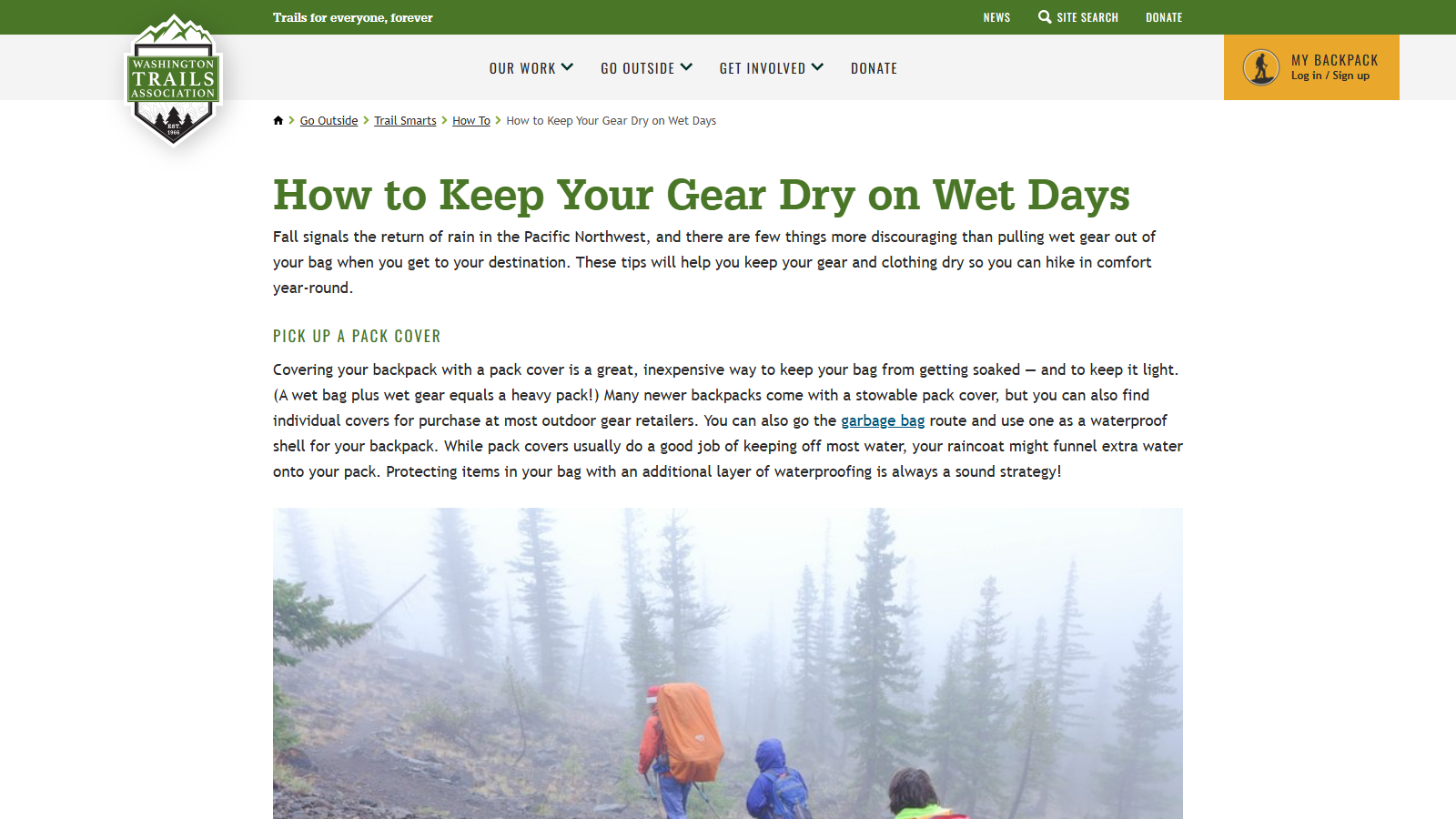
Washington Trails Association page "How to Keep Your Gear Dry on Wet Days," showing the intro, a "Pick up a pack cover" section, and a photo of hikers wearing pack covers on a foggy forested slope

Wet-Weather Gear Care Tips from Washington Trails Association

Washington Trails Association, the nonprofit behind Washington's trail-maintenance and advocacy work, publishes this short guide on keeping gear and clothing dry during Pacific Northwest rain. It covers general wet-weather habits rather than sleeping bag care specifically — there's nothing here about tent condensation, wet down, or drying a bag out on trail, so hikers looking for sleep-system advice should look elsewhere.

What it does cover is practical and specific. A pack cover, or a garbage bag stretched over the backpack as a budget stand-in, keeps the whole load from soaking through and getting heavier. Dry bags in assorted sizes are recommended for organizing gear inside the pack, with resealable bags and trash compactor bags suggested as cheaper substitutes. On clothing, it lays out the classic three-layer system — a light base, midweight insulation, and a rain shell on top — and pairs boots with gaiters to keep water from working down into socks.

The guide closes with a small, easy-to-forget tip: leave a towel and a change of clothes in the car for the ride home. It suits anyone hiking regularly in wet climates who wants a quick refresher on layering and pack protection, though at four short sections it reads more like a checklist than a deep dive — someone already comfortable with rain gear won't find much new here.

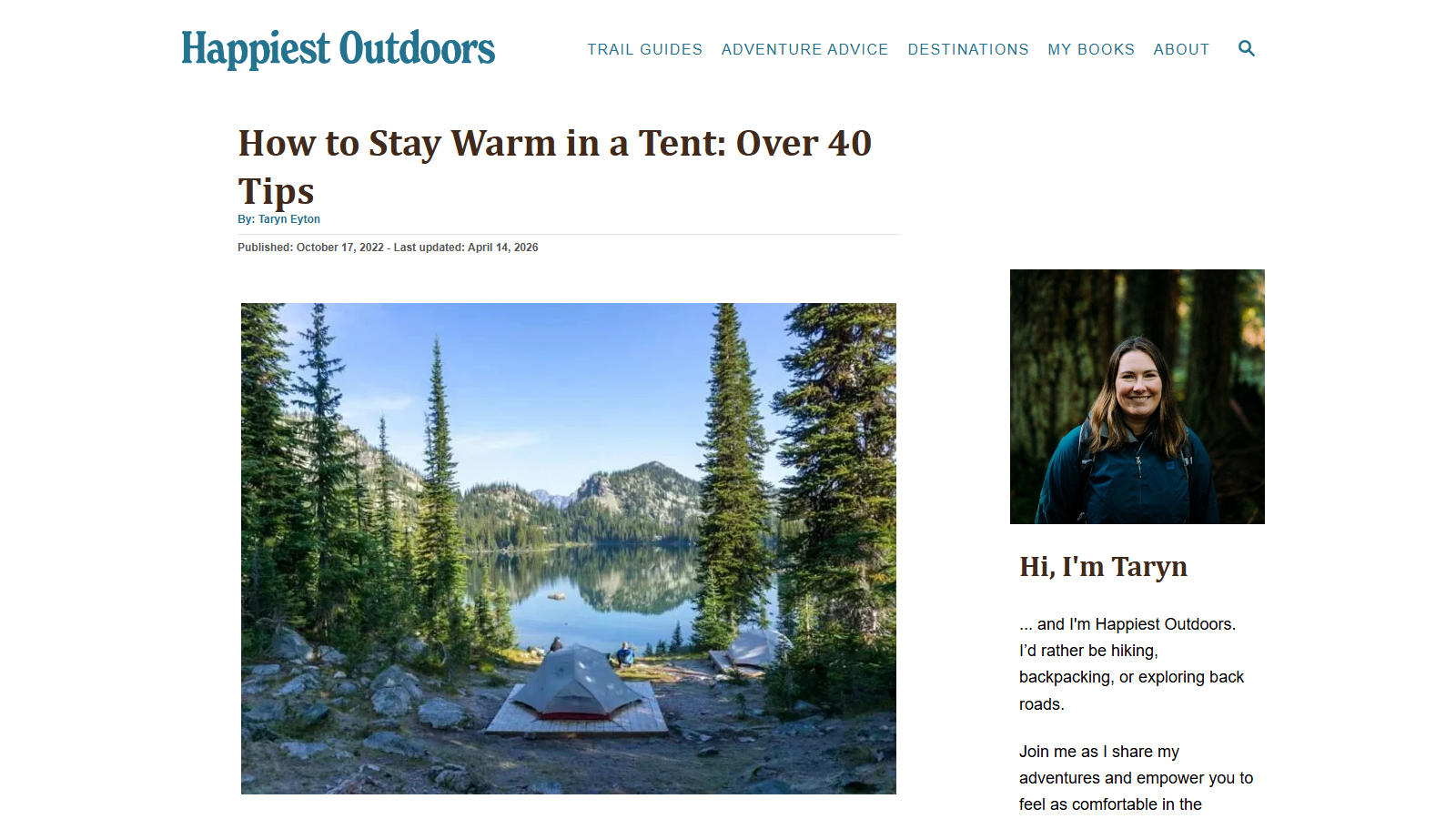
Headline "How to Stay Warm in a Tent: Over 40 Tips" by Taryn Eyton above a photo of a grey backpacking tent on a wooden platform beside a still alpine lake ringed by fir trees and mountains, with the author's portrait in the sidebar

Staying Warm in a Tent: A Backpacker's Guide on Happiest Outdoors

Happiest Outdoors is Taryn Eyton's backpacking and trip-planning blog, and this guide gathers what she has picked up over twenty-plus years of overnight trips about staying warm once you're in the tent. Eyton discloses that some of the outbound gear links earn her a small affiliate commission, and the post also promotes her own backpacking guidebooks to British Columbia and Vancouver Island alongside the advice.

The guide runs through more than 40 individual tips, organized around what actually keeps heat in: picking a smaller, sheltered campsite, sealing condensation out of the tent, matching a sleeping bag's EN or ISO rating to the night's forecast rather than its marketing name, and stacking insulated pads by R-value instead of relying on an air mattress. It also covers dedicated sleep-only base layers, a short bout of exercise before bed, and eating a hot, high-fat meal to keep your body generating heat through the night.

A few myth-busting sections push back on sleeping naked and on running a propane heater inside a tent, explaining the reasoning rather than just issuing a warning. The advice is aimed at three-season backpacking rather than winter mountaineering, so anyone heading into genuinely sub-zero conditions will want a more specialized source alongside it.

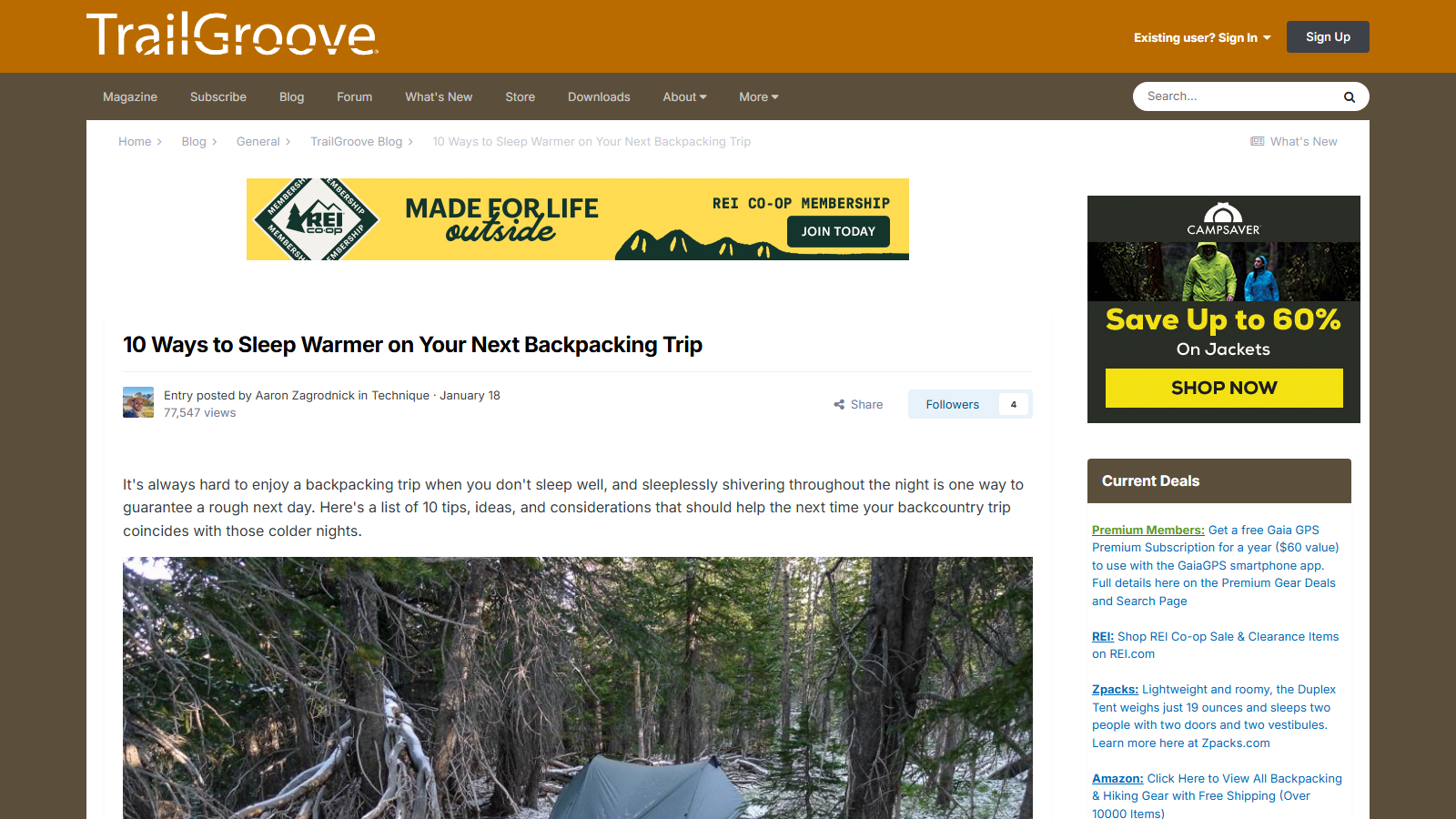
TrailGroove blog entry headed '10 Ways to Sleep Warmer on Your Next Backpacking Trip', posted by Aaron Zagrodnick, with the intro paragraph above a photo of a green tent pitched among snow-dusted trees; an REI membership banner and a Current Deals sidebar surround the article

TrailGroove's 10 Ways to Sleep Warmer While Backpacking

TrailGroove's blog earns its spot here for a practical rundown: ten ways to stay warm through cold nights on a backpacking trip, written by editor Aaron Zagrodnick. Before the tips: the page carries an REI Co-op membership banner and a "Current Deals" sidebar linking to REI, Zpacks, and Amazon, so TrailGroove earns through gear-retailer advertising and partner promotions around the article rather than from the article's own recommendations.

The tips stay grounded in gear you probably already own. A hot-water Nalgene tucked into a sock and dropped into your sleeping bag opens the list, paired with down booties for camp hours outside the bag. From there it covers fundamentals easy to skip after a long day: eating and drinking enough before turning in, picking a sheltered campsite over an exposed one, and layering rather than piling on every piece of clothing you brought.

A couple of tips get more technical: staying dry matters as much as staying insulated, and redistributing clumped-up down inside an older bag can restore some lost loft. When none of that closes the gap, the piece is upfront that the real fix is a higher R-value sleeping pad or a warmer-rated bag, not another trick — a useful admission that tells you when a hot-water bottle has reached its limit.

It suits anyone who gets cold at night in a three-season bag and wants to troubleshoot before buying new gear, though a couple of tips assume you already know your setup's limits.

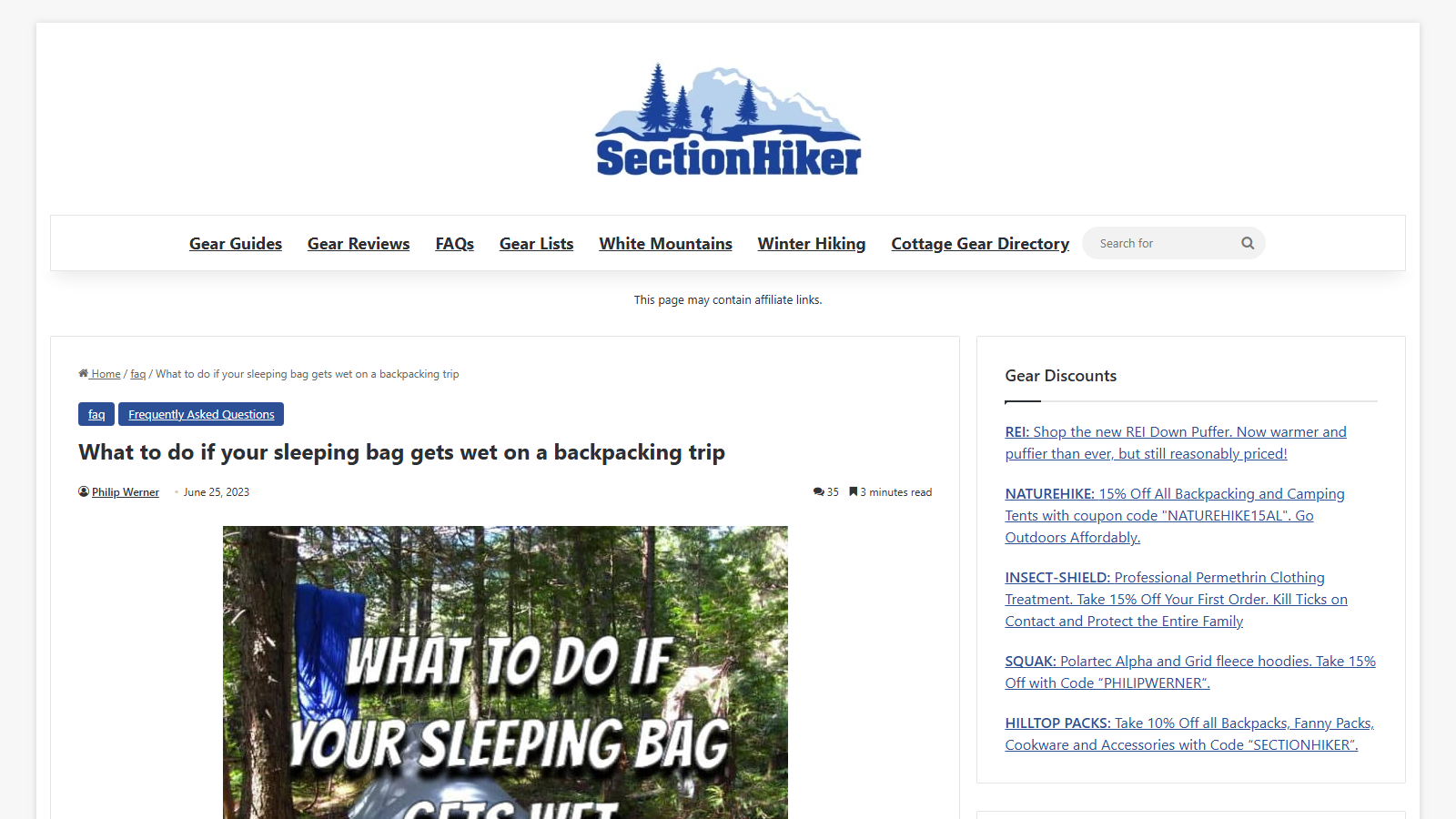
SectionHiker FAQ page "What to do if your sleeping bag gets wet on a backpacking trip" by Philip Werner, June 25, 2023, with a title graphic of a blue sleeping bag hanging from a tree in the forest, and a "Gear Discounts" sidebar of affiliate coupon codes beside it.

SectionHiker's FAQ on Rescuing a Soaked Sleeping Bag on Trail

Philip Werner's SectionHiker FAQ tackles a scenario every backpacker dreads: a sleeping bag that gets soaked mid-trip. The page carries an affiliate-links disclosure and a sidebar of gear-discount codes, so treat the coupon offers as sponsored rather than as part of the advice itself.

The guide opens by having you assess how wet the bag actually is: damp condensation on the foot box is a routine chore, while a bag soaked through from a river fall or flash flood calls for squeezing out water, hanging it to drip, and handling it gently since wet fabric tears more easily. Werner's advice applies to down and synthetic fill alike, which is a useful simplification when you're deciding what to do in the dark.

From there it moves through a rough decision tree: hike out to a laundromat or motel dryer if you're within a day's walk, lean on hiking partners for a shared bag or a "human burrito" wrap if you're not, and, if you're alone, keep moving to stay warm and treat a soaked bag as a prompt to check whether your backup layers (long underwear, a puffy jacket, a pack liner) are enough to get you through the night. The piece is short, a three-minute read built around Werner's own field experience rather than product testing, so it works best as a quick mental checklist rather than a deep technical breakdown of insulation science.